Logistics, shipping, and freight forwarding often look simple on the surface — move goods from Point A to Point B. But for most importers, SMEs, procurement teams, and even large organizations, the reality is far more chaotic:
Your shipment gets delayed at port for unexplained reasons.
Customs clearance feels unpredictable and expensive.
Freight pricing (air or ocean) changes constantly.
Suppliers ship the wrong products because you don’t have a verified process.
Cargo gets damaged due to poor handling or wrong packaging.
Consolidation is mismanaged and tracking is unclear.
Zero visibility into where your goods actually are
Most businesses in Nigeria, Africa, and other developing markets face the same logistics pain, especially when importing from China, Turkey, UAE, UK, or the US.
We are the best Logistics and Freight Service Provider
Welcome to SuperMoonlight Logistics
If you are looking to move any item from China to Nigeria or From Nigeria To China, then you have found the right Logistics service provider.
Logistics refers to the planning, execution, and control of the movement and storage of goods from origin to destination. According to the Council of Supply Chain Management Professionals (CSCMP), logistics is the “part of the supply chain process that plans, implements, and controls the efficient forward and reverse flow of goods, services, and related information.”
To properly understand these logistics problems, you must first understand what logistics truly is, what freight services involve, and what steps in the supply chain typically break down.
Need A Logistics Partner For Your Business? - 09063784316
Schedule
What Is Freight Forwarding?
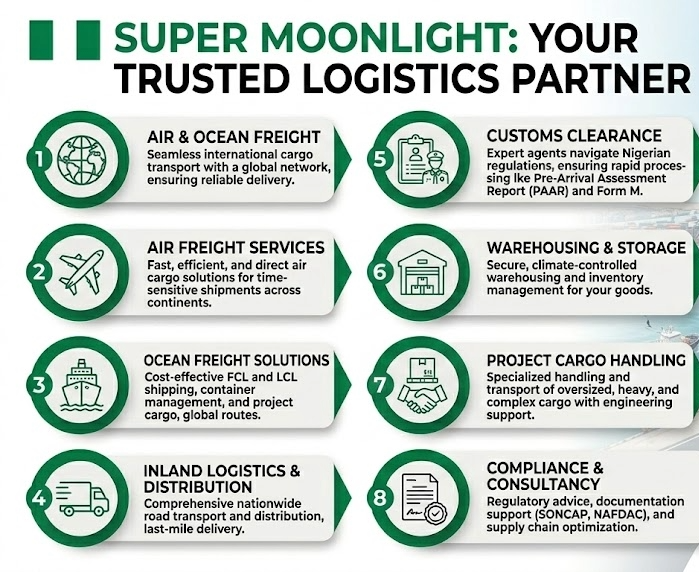
Freight forwarding is the coordination of shipments across air, ocean, or road using carriers, customs brokers, and warehousing partners.
Important roles of a freight forwarder:
Books cargo space
Handles export & import documentation
Manages customs clearance
Coordinates with shipping lines & airlines
Oversees consolidation
Tracks shipment movement
Ensures last-mile delivery
Why Do Logistics Problems Happen?
Customs Uncertainties
Customs processes are one of the most unpredictable aspects of international logistics. Import regulations are updated frequently, and many changes are implemented with little advance notice. When logistics providers or importers fail to stay current, shipments are exposed to delays and penalties. Documentation errors—such as inconsistencies between the commercial invoice, packing list, and bill of lading—often trigger customs queries or inspections. In addition, duties and tariffs are commonly miscalculated due to incorrect HS code classification or valuation errors. These mistakes can result in underpayment or overpayment of duties, prolonged clearance timelines, cargo holds, and unexpected demurrage charges at ports.
Poor Supplier / Exporter Handling
Many logistics challenges originate at the supplier level, long before cargo reaches a port or airport. Factories operating under tight production deadlines may rush packaging, increasing the risk of damage during transit. Improper carton strength, inadequate cushioning, or non-compliant packaging materials can all compromise cargo integrity. Incorrect or incomplete labeling—such as missing consignee details, carton counts, or handling instructions—often leads to cargo rejection, inspection delays, or misrouting. When supplier handling standards are weak, downstream logistics providers are forced to manage preventable issues that increase cost and delay delivery.
Freight Capacity Issues
Global freight capacity is dynamic and heavily influenced by seasonal demand, fuel costs, and geopolitical or economic conditions. Airlines frequently adjust available cargo space, especially during peak seasons when passenger traffic takes priority. Similarly, shipping lines experience congestion at major ports, including high-volume Chinese export ports and Lagos ports in Nigeria. These capacity constraints lead to delayed sailings, rolled bookings, container shortages, and volatile freight rates. For importers without priority access or strong carrier relationships, capacity issues can significantly disrupt supply chains and delivery schedules.
Consolidation Delays
Cargo consolidation is a cost-saving strategy, but it can become a major source of delay when poorly managed. Forwarders often batch cargo until sufficient volume is reached, which means individual shipments may wait longer than expected before departure. If one shipment in a consolidation batch arrives late, it can delay the entire group. Additionally, improper palletizing or poor container loading practices increase the risk of cargo shifting during transit, resulting in damage or loss. Without strict cut-off times, professional loading standards, and clear consolidation schedules, this approach can compromise both timelines and cargo safety.
Warehousing and Handling Weaknesses
Warehousing and cargo handling are critical yet often overlooked stages in the logistics process. Many logistics providers lack controlled storage environments, particularly for sensitive or high-value goods. Poor stacking methods, inadequate handling equipment, and insufficient staff training frequently lead to damage during loading and unloading. Inconsistent inventory management and weak handling procedures further increase the risk of misplaced or damaged cargo. Because issues at this stage may not be immediately visible, damage is often discovered only at final delivery, creating disputes, delays, and additional costs for importers.
Ways Importers Typically Solve Logistics Issues
OPTION 1: Handle logistics yourself (DIY method)
You contact a supplier → find a shipper → find a clearing agent → find a truck → chase tracking.
This is the most stressful and risky option.
Problems:
Zero transparency
No single point of responsibility
Price inconsistencies
Lack of insurance
High clearance risks
No compensation if anything fails
OPTION 2: Use a freight forwarder but manage procurement separately
You buy from suppliers yourself, then hand over goods to a forwarder.
Risks:
Supplier may delay
Incorrect packaging
Miscommunication
No pre-shipment inspection
Freight forwarder is limited because they didn’t handle the origin side
OPTION 3: Use freight forwarding only for shipping (Air or Ocean)
This solves part of the problem but leaves:
Supplier verification issues
Consolidation quality issues
Inventory management challenges
Forwarding alone cannot guarantee quality.
OPTION 4: Use an end-to-end logistics partner (Procurement → Freight → Clearance → Delivery)
This is the most reliable, especially for international trade.