

So you’ve decided to import from China, maybe you’ve seen other business owners doing it, or you found a product with insane margins, but then, you start googling and suddenly you’re drowning in Alibaba listings, scam warnings and all.
You are wondering how to find a reliable supplier in China, the first thing to know is that not every supplier you see online is genuine. Many may look professional, but some are just middlemen or even fake companies posing as manufacturers. Without proper verification, you could end up with poor-quality products, hidden costs, or even lose your money.
For many importers, what starts as an exciting opportunity to make good profit can quickly turn into frustration, poor product quality, delays, and unexpected issues. The real challenge isn’t just finding a supplier. It’s making sure the supplier is actually genuine. There are many fake factories and middlemen who pretend to be manufacturers just to win your trust.
If you use platforms like Alibaba or Global Sources, you’ve probably seen very cheap offers that look too good to be true. Most times, they are. A price that is about 30% lower than others is often a warning sign. It could mean a scam or a supplier who doesn’t really control production. And the risk goes beyond just losing goods. Without proper checks, you could face payment defraud, false promises, hidden charges. Before you send any money, don’t rely only on “verified” badges you see online. You need to go beyond what you see on the screen and make sure the supplier and their production process are real and reliable to truly protect your business.
How to Find a Reliable Supplier in China: Factory vs Trading Company
Before choosing a reliable supplier, it’s important to understand the two main types of businesses you’ll find on B2B sourcing platforms.
1. Manufacturers (OEM – Factories)
These are the actual producers of goods. Sourcing directly from a manufacturer in China often means lower product cost and better control over product quality
However, most factories require higher minimum order quantities (MOQ), which may not be ideal for beginners in importation business.
2. Trading Companies (Middlemen)
Trading companies act as suppliers but don’t produce the goods themselves. They connect buyers to factories. They are useful if you want to have easier communication with international buyers and have access to a wider range of products
The limitation to this is that prices are usually higher due to added markup and they usually hide the source of the real product, thereby, making supplier verification harder.
Business Verification: A Key Step to Finding a Reliable Supplier in China
When sourcing from China suppliers, proper supplier verification is very important. Every registered company in China has a unique business ID called the Unified Social Credit Code.
A business license is the main document every legal company in China must have. It contains the company name, business scope (what they actually do), registered capitalLegal representative, Unified Social Credit Code (company ID)
Ask the supplier to send a clear, recent copy of these documents. Think of it as the company’s official identity. If a supplier refuses to provide their business license, that is a major red flag in international trade. The three key things to check are:
1. Business Scope
This shows what the company is legally allowed to do. Manufacturing or processing is likely a real factory while trading, wholesale or consulting is likely a middleman. Understanding this helps you avoid fake suppliers and improves your supplier sourcing strategy.
2. Registered Capital
This reflects the company’s financial strength. Higher capital often means a more stable and reliable supplier while very low capital can indicate higher risk. This is an important factor in import risk management.
3. Legal Representative
Every company has an official registered owner. Make sure the person you’re speaking with matches the company’s records to prevent you from supplier fraud.
How to Choose Between Alibaba and a Sourcing Agent for China Importation
When deciding how to find your supplier, you will reach a crossroad where you ask if you use a Sourcing Platform or hire a Sourcing Agent. While they both lead to the same goal, the journey and the risks are very different.
Best sourcing platforms for importing from China
Platforms like Alibaba, Global Sources, and Made-in-China are high-volume search engines.
Most users searching for “how to find suppliers on Alibaba“ are looking for speed and variety. You are effectively your own detective. You must manually verify the Business Scope and hope the Trade Assurance covers any quality disputes. It is a “DIY” approach that works best for small orders or simple, off-the-shelf products.
Here are some of the best places to start sourcing products in 2026:
Alibaba.com
This is still one of the most popular B2B sourcing platforms worldwide. It’s beginner-friendly and offers a wide range of suppliers.
Make sure you use Trade Assurance, which helps protect your payment when dealing with new suppliers.
1688.com
This platform is mainly used within China, so prices are often much lower. It’s a great option if you want to reduce costs and increase profit.
However, the website is in Chinese, and payments can be tricky. So many people work with Super moon light as a sourcing agent in China to navigate it.
Global Sources
Best known for higher-quality and verified suppliers, especially for electronics and premium products.
It’s a good choice if you want more reliable suppliers and fewer risks.
YiwuGo
This platform connects you to suppliers from the Yiwu International Trade City, one of the largest wholesale markets in the world.
It’s perfect for small items like gifts, accessories, and products with low minimum order quantity (MOQ).
The Sourcing Agent
A China Sourcing Agent is a professional service provider who manages the factory relationship for you.
Users looking for “China sourcing agent fees” or “reliable sourcing agent in Guangzhou” are usually moving from testing to scaling.
The agent handles the Mandarin negotiation, conducts On-site Factory Audits, and prevents Quality Fade. They bridge the cultural and language gap that a website cannot.
DIY Sourcing vs Hiring a China Sourcing Agent
Choose a Sourcing Platform if you are starting with a small budget, buying standard products, and have the time to vet at least 10–20 suppliers yourself but if you are developing a custom OEM product, spending over $5,000, or need to ensure your goods meet strict Nigerian regulatory standards, is recommended you choose a sourcing agent.
When starting out, many people try to handle everything themselves. But as your business grows, working with a sourcing agent can make things much easier.
A sourcing agent based in cities like Shenzhen or Yiwu can help you:
- Find reliable suppliers
- Visit factories on your behalf
- Carry out factory audits
- Handle pre-shipment inspections before your goods are sent out.
This reduces your risk and gives you more confidence, especially when you can’t travel yourself. For many businesses, the best approach is a mix of both do your own research online, then use a sourcing agent for verification and quality control.
Many Nigerian importers find that combining these tools works best. They use platforms for initial research but rely on a specialized partner like Super Moonlight Logistics to handle the heavy lifting of documentation, customs clearing, and China to Nigeria Logistics. This hybrid model offers the best of both worlds.
How to Find Reliable Suppliers at China Trade Shows
If you have the budget, visiting suppliers in person can give you a big advantage. Meeting manufacturers face-to-face helps you build trust and often leads to better prices.
Some top trade shows to consider in China are:
1. Canton Fair (Guangzhou)
Canton Fair is the largest trade fair in the world, covering almost every type of products such as electronics and machinery, home goods and gifts, textiles and office supplies. If you are looking to deal with these types of products, Guangzhou is the best place to visit.
2. CHINAPLAS (Shenzhen/Shanghai)
This is a leading event for plastics and manufacturing technology. Best for industrial and production-focused businesses.
3. Global Sources Expo (Hong Kong)
Global sources expo is a well-organized trade show focused on tech, fashion, and export-ready products. Ideal for brands looking for reliable suppliers.
| Sourcing Channel | Best For | Typical MOQ | Risk Level |
| Alibaba | Beginners/Dropshipping | Low to Medium | Medium |
| 1688.com | High-Volume/Best Price | High | High |
| Global Sources | High-End Electronic | Medium | Low |
| Trade Shows | Custom/OEM Builds | High | Very Low |
| Sourcing Agent | Complex Logistics | Varies | Very Low |
How to Choose the Right Supplier in China Without Getting Scammed
Here’s the thing, most Nigerian importers don’t have the time or contacts to physically vet suppliers in China because they don’t want to be scammed in the process. That’s exactly why businesses like Super Moonlight Logistics exist. Super Moonlight offers direct assistance with product sourcing and procurement in China for Nigerian businesses. So instead of navigating Alibaba alone, they handle it with you.
If you want to handle it by yourself, after you’ve found a few potential suppliers, the next step is to narrow them down carefully. Don’t choose based on price alone, focus on trust, transparency, and proper verification.
1. Do a Proper Background Check
Start by asking for the supplier’s business license. This helps you confirm if the company is real.
You can also verify their details using the official Chinese company database (NECIPS).
If the business scope includes “manufacturing” or “production”, they are likely a real factory but if it only says “trading” or “consulting” they are probably a middleman
2. Always Request a Sample
Never place a bulk order without testing the product first. Your sample is your standard for quality.
Ask the supplier to make a small change or customization to the sample. A real factory (OEM) can easily adjust the product. A reseller or middleman may struggle to do this
3. Use a Third-Party Inspection Service
A trustworthy supplier should be open to independent checks. You can mention companies like SGS, QIMA, or Intertek for a factory audit.
These inspections help you confirm:
- The factory is real
- Their production process is standard
- Their quality management system (QMS) is in place
- They follow proper working and safety conditions
4. Do a Live Video Check
Photos can be edited or even fake, so don’t rely on them alone. Ask for a live video call and request a factory tour. Pay attention to the machines they are using whether the setup matches their product listings he company name on buildings or signage
5. Protect Your Money
Always use secure payment methods when dealing with new suppliers.
Use Trade Assurance (on Alibaba) or escrow payments and avoid sending money through Western Union or personal bank accounts
If a supplier insists on unsafe payment methods, it’s best to walk away.
Common Red Flags to Watch Out For
Here are some warning signs that a supplier may not be trustworthy.
- They refuse a third-party factory audit
- The company name on the bank account doesn’t match their business license
- They reply too quickly but avoid answering technical questions
- Their business scope is too broad (for example, selling both electronics and shoes)
Take your time when choosing a supplier. A little extra effort at the beginning can save you from major losses later.
How to Place a Safe Order with a Chinese Supplier and Protect Your Payment
Choosing the right supplier is only the first step. The real work starts when you place your order and begin the shipping process. This is where you protect your money and make sure your goods actually arrive safely.
1. Understand Shipping Terms (Incoterms)
Before making any payment, agree on the shipping terms. These terms explain who is responsible for costs, risks, and delivery at each stage. Common options are:
EXW (Ex Works)
You handle everything, from picking up the goods at the factory to final delivery. This is best for experienced importers and for newbie.
FOB (Free on Board)
The supplier delivers the goods to the port in China, and you take over from there. This is a popular and cost-effective option.
DDP (Delivered Duty Paid)
The supplier handles everything, including shipping, customs, and delivery to your location.
Best for beginners, but usually more expensive.
2. Put Everything in Writing
Don’t rely on chats or verbal agreements. Always create a proper purchase order (PO) or sales contract. Make sure it includes product details (material, size, color, packaging), production and delivery timelines, what happens if there is a delay or poor quality (penalty terms). This protects you if anything goes wrong.
3. Use Safe Payment Terms
A common payment method in international trade is 30% deposit and 70% balance. 30% is to be paid to start production while the remaining 70% balance is paid after inspection before shipping.
It is expected you pay the remaining balance after confirming the goods meet your quality standards. For safety purpose, use trade assurance or escrow payment methods.
The 7-Step Shipping Process: From Factory to Your Door
You found a supplier, now what next? Shipping. There are two main route to ship your goods to Nigeria, sea freight and air freight. Sea freight is cheaper but takes longer time while air freight is faster and pricier. If you are importing 10 bags of phone accessories, air freight makes sense, if you are importing 500 cartons of clothing, sea is better.
Super Moonlight specializes in Full Container Load (FCL) and Less Than Container Load (LCL) options. A flexible solution that matches your cargo size and urgency.
Talking about how shipping is charged by volume/weight, and how poorly packed goods eat into your profit.
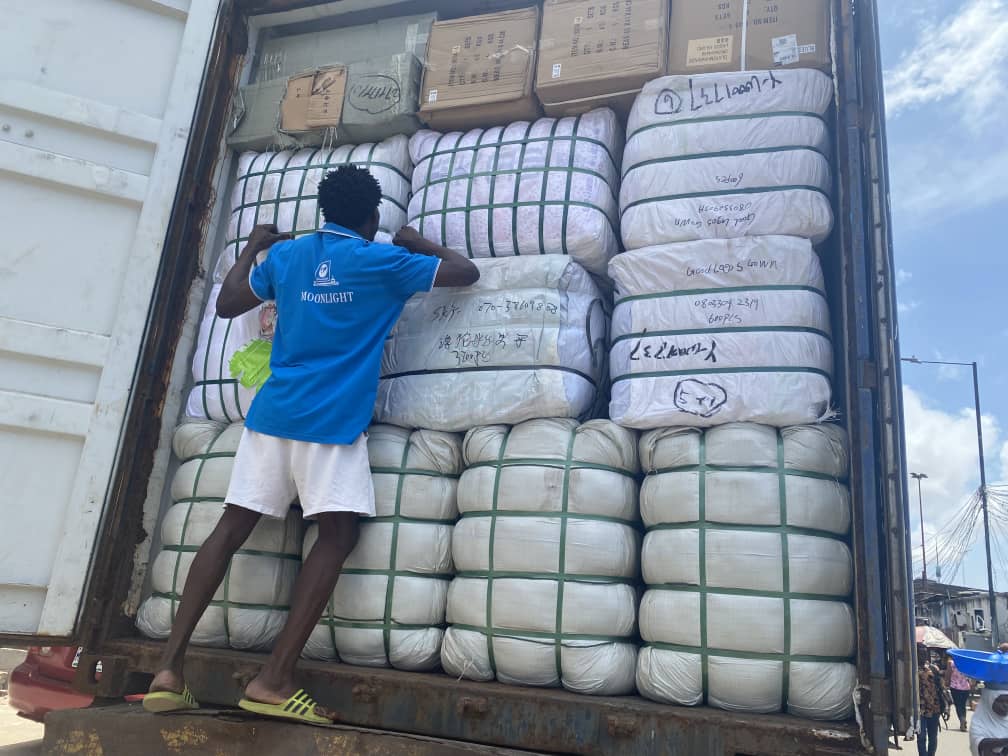
Super Moonlight’s goods compression service is designed to help clients ship smarter because every inch of container space matters, and wasted space equals wasted money, many will not talk about the hidden cost in this aspect.
Follow these steps to avoid delays, extra charges, or lost goods.
1. Pre-Shipment Inspection
Before paying the final balance, hire a third-party inspector. They will check your product quality, compare it with your approved sample and confirm proper packaging for shipping
2. Pay Balance & Get Documents
Once the inspection is successful you can pay the remaining 70%. The supplier is expected to release shipping documents like the Bill of Lading (B/L). This document proves ownership of your goods.
3. Book Shipping and Cargo Handling
Once your goods are cleared for shipping, they need to be properly booked and loaded. Super Moonlight provides efficient cargo booking and professional loading services to ensure safe transportation of your goods.
4. Move Goods to the Port
The goods are transported to the shipping port in China (for example, Shenzhen or Shanghai). This is where export clearance is completed.
5. Transit (Shipping Stage)
Your goods are loaded onto a ship or plane. You will receive tracking details to monitor the shipment.
Step 6: Arrival & Customs Clearance
This is a fear point for most Nigerian importers, documents like FORM M, SONCAP, HS codes are crucial to clear your goods.
Super Moonlight’s customs clearance team handles document preparation, duty calculation, duties and taxes payment and cargo release coordination, so your goods move through without unnecessary delays, penalties, or paperwork headaches. Once cleared, your goods are released.
7. Final Delivery
The goods are picked up from the port and delivered to your warehouse, shop, or home.
Building a Strong Supply Chain: What Happens After Your First Shipment
A successful importer doesn’t just focus on one good order. The real goal is to build a reliable and long-term supply chain system that consistently delivers quality products.
Once your first shipment arrives, the real evaluation begins.
1. Watch for Quality Consistency (Avoid “Quality Drop”)
It’s common for a supplier to deliver excellent quality on the first order, then reduce standards on future orders. This is often called quality fade.
To avoid this regularly check product performance, compare each new batch with your original sample and always carry out random quality inspections, even with trusted suppliers.
This helps you ensure your supplier is not secretly reducing material quality to cut costs.
2. Renegotiate as Your Business Grows
As your order size increases, your bargaining power also increases. Instead of staying at the same terms, use your consistency and purchase history to negotiate better deals.
You can request lower prices per unit, reduced MOQ and better shipping terms. At this stage, you are no longer just a buyer you are becoming a long-term business partner to the supplier.
3. Simplifying Shipping from China to Nigeria
For many Nigerian importers, the biggest challenge is not finding suppliers. it’s handling logistics, customs clearance, and documentation.
Delays often happen at ports like Lagos due to poor paperwork or lack of experience.
To avoid these issues, many businesses now work with professional like Super moon light logistics partners instead of managing everything themselves.
Why logistics support matters
-
End-to-end shipping management
They handle everything from pickup at the factory in China to delivery in Nigeria. -
Customs and documentation support
They assist with important processes like Form M, PAAR, and customs clearance to reduce delays and unexpected charges. -
China-to-Nigeria expertise
They understand the specific shipping routes, port procedures, and clearing systems used in Nigeria, which helps avoid costly mistakes.
When you combine good suppliers with proper supply chain management, your business becomes more stable, scalable, and profitable.
Finding a reliable supplier in China doesn’t have to be a guessing game especially when you have the right shipping partner handling things on the ground. Super Moonlight Logistics has been doing this since 2018, and thousands of Nigerian importers trust them to get it right.
Ready to import smarter? Contact Super Moonlight Logistics today
