

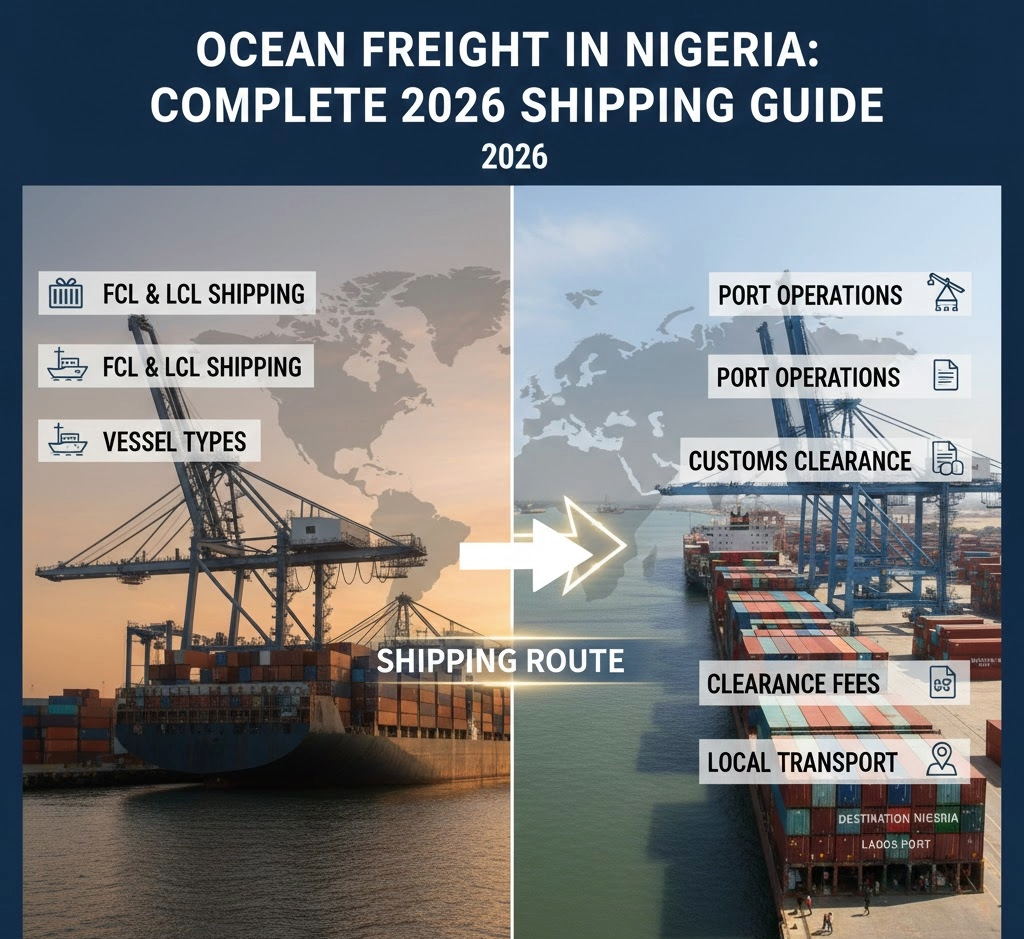
Ocean freight remains the backbone of global trade, moving over 80% of international cargo worldwide. For businesses importing or exporting goods, understanding ocean freight in Nigeria is essential to reduce costs, avoid delays, and ensure seamless delivery.
Whether you’re a manufacturer, importer, distributor, or e-commerce business, this comprehensive guide explains how ocean freight works, the costs involved, timelines, documentation, and how to choose the right logistics partner like Super Moonlight Logistics.
What Is Ocean Freight
Ocean freight refers to the transportation of goods via cargo ships across international waters. It is the most cost-effective shipping method for large, heavy, or bulk shipments.
Businesses choose ocean freight in Nigeria when they want:
- Lower shipping costs
- Large cargo capacity
- Reliable international trade routes
- Efficient bulk transportation
Why Ocean Freight Is Important for Nigerian Businesses
Nigeria is one of Africa’s largest import markets, relying heavily on maritime shipping for goods such as:
- Electronics
- Construction materials
- Industrial equipment
- Consumer goods
- Automobiles
Ocean freight enables Nigerian businesses to scale operations by reducing logistics costs and ensuring steady supply chains.
How Ocean Freight Works in Nigeria
The ocean freight process typically involves:
1️. Cargo pickup from supplier
2️. Transport to port of origin
3️. Container loading
4️. Sea transportation
5️. Arrival at Nigerian port
6️. Customs clearance
7️. Inland delivery
Types of Ocean Freight Services
Understanding service types helps you choose the right option for your shipment.
1. Full Container Load (FCL): You book an entire container for your cargo.
Best for:
- Large shipments
- High-value goods
- Faster transit
2. Less than Container Load (LCL): Your cargo shares container space with other shipments.
Best for:
- Small shipments
- Lower budgets
- Flexible volumes
3. Roll-on/Roll-off (RoRo): Used mainly for vehicles and heavy machinery.
4. Break Bulk Shipping: For oversized cargo that cannot fit into containers.
Major Seaports in Nigeria
Nigeria’s ocean freight operations revolve around major ports:
- Apapa Port
- Tin Can Island Port
- Onne Port
- Port Harcourt Port
Ocean Freight Costs in Nigeria
The cost of ocean freight in Nigeria depends on several factors.
Key Cost Components
- Freight charges
- Container fees
- Terminal handling charges
- Customs duties
- Clearing charges
- Inland transportation
Estimated Costs (2026)
| Shipment Type | Cost Range |
| LCL | $80 – $150 per CBM |
| FCL 20ft | $3,500 – $5,500 |
| FCL 40ft | $5,500 – $8,500 |
Transit Time for Ocean Freight
Transit times vary based on origin country.
| Route | Transit Time |
| China to Nigeria | 30–45 days |
| Europe to Nigeria | 20–35 days |
| USA to Nigeria | 35–50 days |
Required Shipping Documents
To ship cargo via ocean freight, you’ll need:
- Bill of Lading
- Commercial Invoice
- Packing List
- Form M
- SONCAP Certificate (for regulated goods)
- Insurance certificate
Customs Clearance Process
Customs clearance is a critical stage in ocean freight in Nigeria.
Steps Involved
- Document submission
- Duty assessment
- Cargo inspection
- Payment of duties
- Release order
Advantages of Ocean Freight
- Cost Efficiency: Sea shipping is cheaper per unit than air freight.
- High Capacity: Ships can carry large volumes of cargo.
- Environmental Benefits: Lower carbon footprint compared to air freight.
- Global Reach: Access to international markets.
Challenges of Ocean Freight in Nigeria
Despite its advantages, businesses may face:
- Port congestion
- Customs delays
- Documentation errors
- Demurrage charges
- Regulatory complexities
How to Choose an Ocean Freight Provider
When selecting a provider for ocean freight in Nigeria, consider:
- Industry experience
- Transparent pricing
- Strong carrier network
- Customs clearance expertise
- Tracking and customer support
Why Choose Super Moonlight Logistics
Super Moonlight Logistics offers reliable ocean freight solutions tailored to businesses of all sizes.
Services Offered
✔ FCL & LCL shipping
✔ Customs clearance
✔ Cargo tracking
✔ Warehousing
Benefits
- Faster clearance
- Competitive pricing
- Professional logistics support
- Nationwide delivery
Ocean freight remains the most cost-effective and scalable shipping method for businesses involved in international trade. Understanding how ocean freight in Nigeria works from costs to documentation and clearance helps businesses plan better and avoid costly delays.
Partnering with an experienced logistics provider ensures smooth operations, faster delivery, and optimized shipping costs.
Ready to ship your cargo safely and affordably? Request a quote today and let our experts handle your shipping from port to destination.
