

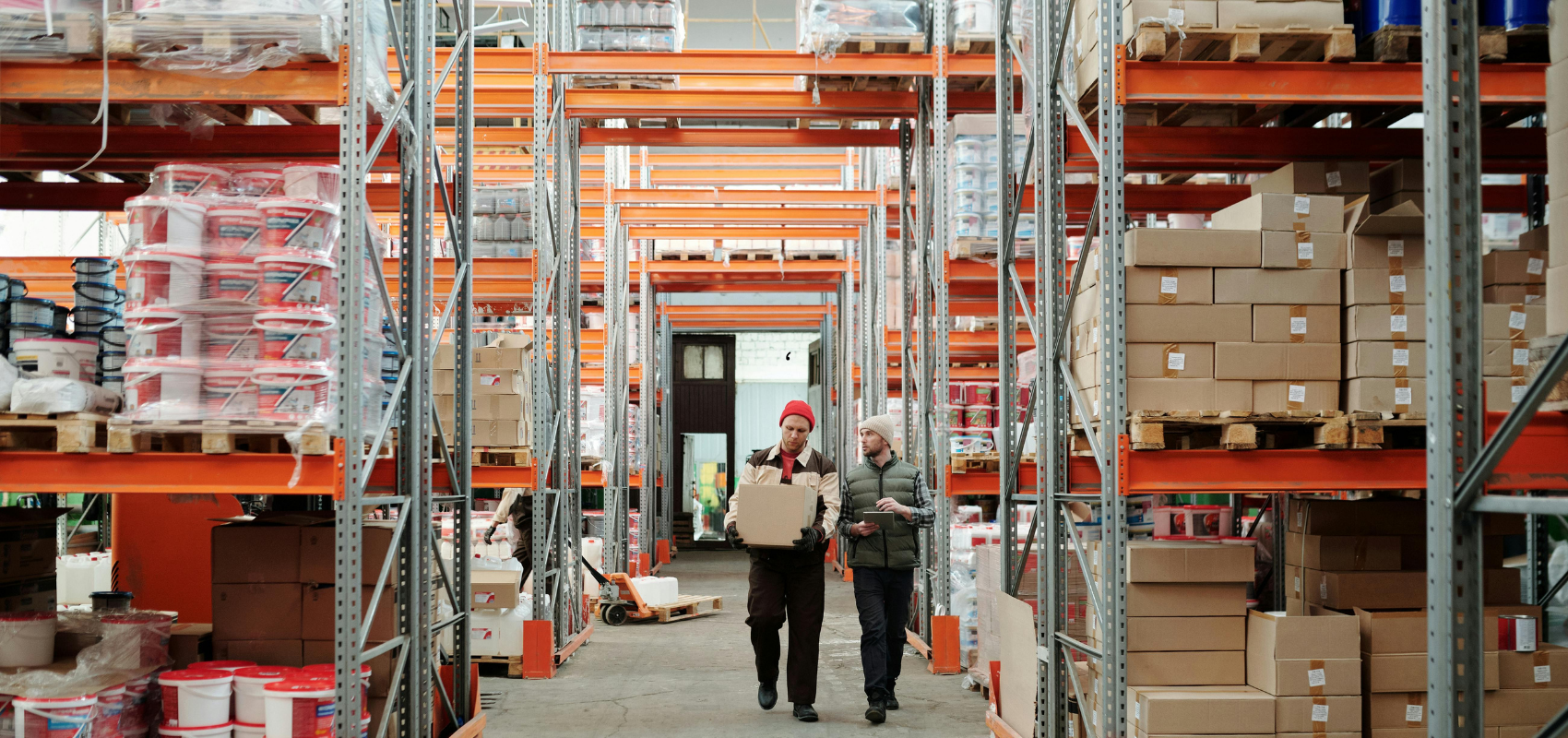
Across Nigeria’s logistics ecosystem, warehouses are often treated as mere holding spaces rather than strategic business assets. From Lagos to Onitsha, Ibadan to Kano, many shippers, distributors, and even growing e-commerce brands struggle with persistent warehouse-related issues that silently erode profit and efficiency.
Products get damaged due to poor stacking. Inventory records do not match physical stock. Orders are delayed because items cannot be located on time. Some goods expire unnoticed, while others remain buried under newer stock. In many cases, theft and pilferage go undetected until customers start complaining.
For shipping agencies and business owners, the warehouse becomes a pressure point—one that affects customer satisfaction, delivery timelines, regulatory compliance, and ultimately revenue. These problems are not caused by lack of effort but by the absence of structured warehouse best practices in storage, handling, and inventory control.
Understanding Why These Problems Persist (I)
To fully understand the warehouse challenge in Nigeria, we must look beyond surface-level symptoms and examine systemic issues.
Many warehouses operate without defined storage layouts. Goods are stored wherever space is available, not where they should logically reside based on turnover rate, fragility, or handling requirements. This leads to congestion, inefficient picking, and increased product damage. Temperature-sensitive goods, such as pharmaceuticals or food items, are often stored without adequate environmental control, increasing spoilage risks.
Handling practices also contribute significantly to warehouse inefficiency. Manual handling dominates most facilities, yet staff are rarely trained in safe lifting techniques, equipment usage, or standard operating procedures. Forklifts, pallets, and racks—when available—are either poorly maintained or incorrectly used. Over time, this results in workplace injuries, damaged goods, and slower operations.
Inventory control presents an even bigger challenge. Many Nigerian warehouses still rely on paper records or basic spreadsheets that are not updated in real time. This creates discrepancies between recorded and actual stock levels, making forecasting and replenishment almost impossible. Businesses are forced to either overstock—tying down capital—or understock, leading to lost sales.
These issues are not unique to Nigeria, but the impact is amplified by infrastructure constraints, power supply instability, and limited access to modern warehouse management systems. According to global logistics standards highlighted by [International best practices in warehouse management (anchor text suggestion)], poor storage and inventory processes can increase operational costs by over 25%. Likewise, insights from [supply chain efficiency benchmarks by the World Bank (anchor text suggestion)] show that structured warehousing directly improves national logistics performance.
The good news is that these challenges are solvable—when approached strategically.
Moving from Problems to Practical Solutions
Once warehouse challenges are clearly understood, the next step is to explore how businesses typically attempt to solve them. Over the years at Super Moonlight Logistics, we have seen different approaches shippers adopt—some effective, others less so.
Rethinking Warehouse Storage Structure
One common approach businesses take is reorganizing how goods are stored. Instead of random placement, storage is redesigned around product categories, movement frequency, and physical characteristics. Fast-moving items are placed closer to dispatch areas, while slow-moving or bulk items are stored deeper within the facility.
This approach reduces picking time, minimizes congestion, and lowers the risk of damage caused by excessive movement. Proper racking systems are introduced to utilize vertical space efficiently, especially in high-rent locations like Lagos and Port Harcourt. When done correctly, structured storage transforms a warehouse from a cluttered space into a controlled operational environment.
Improving Handling Through Process and Equipment
Another option many shippers explore is improving how goods are handled within the warehouse. This usually involves introducing basic material-handling equipment such as pallets, forklifts, hand trucks, and conveyor systems where feasible.
However, equipment alone does not solve the problem. Businesses that see real improvements often pair equipment upgrades with staff training and clearly documented handling procedures. Workers understand how goods should be moved, stacked, and transferred without compromising safety or product integrity. This reduces losses, improves morale, and increases overall warehouse productivity.
Adopting Inventory Control Systems
To tackle inventory inaccuracies, some organizations invest in inventory control solutions. This can range from structured manual stock-taking schedules to digital inventory management systems that track stock movements in real time.
With proper inventory control, warehouse managers gain visibility into stock levels, expiry dates, reorder points, and sales velocity. This option is particularly attractive to e-commerce businesses and FMCG distributors who handle large SKU volumes. When inventory data becomes reliable, decision-making improves across procurement, sales, and logistics operations.
Choosing the Most Effective Warehouse Approach
While each of these approaches offers value, the most successful warehouses do not rely on just one. The key lies in selecting a combination that aligns with business size, product type, and growth objectives.
At Super Moonlight Logistics, we have learned that storage optimization without proper handling processes still leads to damage. Likewise, advanced inventory systems without disciplined storage layouts only digitize chaos. The best results come from integrating structured storage, standardized handling, and accurate inventory control into a single operational strategy.
This integrated approach ensures that goods are stored logically, handled safely, and tracked accurately from inbound receipt to final dispatch. It also allows businesses to scale operations without losing control, even as order volumes increase.
Putting Best Practices into Action
Execution is where strategy meets reality. Implementing warehouse best practices requires intentional steps and consistency rather than sudden overhauls.
The process often begins with a warehouse audit—assessing current storage layout, handling methods, and inventory accuracy. From this assessment, zones are created based on product categories and movement frequency. Clear labeling, aisle markings, and bin locations are introduced to eliminate confusion and speed up operations.
Handling procedures are then standardized. Staff are trained on how to lift, stack, move, and load goods safely. Equipment maintenance schedules are enforced to prevent breakdowns that disrupt workflow. Simple safety measures, such as reflective jackets and designated walkways, significantly reduce accidents.
Inventory control is strengthened by introducing regular cycle counts and, where possible, digital tracking tools. Even small businesses can start with affordable inventory software before transitioning to full warehouse management systems. Best practices recommended in [inventory accuracy improvement guidelines (anchor text suggestion)] and operational frameworks outlined by [global warehouse optimization resources (anchor text suggestion)] provide valuable implementation insights.
The key to successful execution is consistency. Best practices must become daily habits rather than one-off projects.
Measuring Success and Continuous Improvement
Evaluation is what transforms warehouse improvements into long-term operational excellence. Businesses must continuously assess whether the adopted practices are delivering measurable results.
Key indicators such as order fulfillment time, inventory accuracy, damage rates, and storage space utilization provide clear performance signals. When inventory discrepancies reduce, customer complaints decline, and dispatch speed improves, it becomes evident that the warehouse is no longer a bottleneck but a competitive advantage.
Regular reviews also help identify new challenges early. As business volumes grow or product lines expand, warehouse processes can be refined without disrupting operations. This ongoing evaluation reassures business owners and logistics managers that warehouse challenges—no matter how overwhelming they once seemed—are manageable with the right structure and mindset.
With proper storage, disciplined handling, and accurate inventory control, warehouses stop being cost centers and start functioning as profit enablers. At Super Moonlight Logistics, we have seen firsthand how these best practices restore confidence, improve service delivery, and create scalable logistics operations across Nigeria.
In the end, the warehouse problem is not as big as it first appears—once best practices are applied with clarity, commitment, and consistency.
