

How to Source Products from China for Your Nigerian Business — The Complete Importer’s Guide (2026
Breaking into global trade can feel overwhelming, but learning how to source products from China for Nigerian business is one of the smartest ways to grow a profitable brand in today’s competitive market. With China offering a wide range of affordable goods, Nigerian entrepreneurs now have the opportunity to buy directly from manufacturers and maximize their profit margins.
In this guide, you’ll discover how to identify trusted sourcing platforms, understand the full sourcing and procurement process, choose secure payment methods, navigate shipping from China to Nigeria, and handle customs clearing and final delivery with confidence.
Identify tested sourcing platform for china product to nigeria
Knowing how to source products from China for Nigerian business starts with choosing the right platforms.You might be stuck with the question “ which app can I use to import goods from China to Nigeria”. The truth is reliable sourcing platforms act as a bridge between you and verified manufacturers, helping you reduce risk and find quality products at competitive prices.
Popular options like Alibaba, 1688, Taobao, AliExpress and Made-in-China are widely used by importers because they provide access to thousands of suppliers across different industries, however, not every supplier on these platforms is trustworthy.
There are things you need to do, focus on sellers with verified badges, strong transaction history, and positive customer reviews, check key details such as years in business, response rate, and product certifications. It is also smart to request samples before placing bulk orders and communicate directly with suppliers to assess professionalism.
Top 5 Sourcing Platforms for China Products to Nigeria
Alibaba
Alibaba is a global B2B platform designed for bulk buying. Nigerian importers can connect directly with manufacturers, request quotes, negotiate prices, and customize products (OEM/ODM). Most suppliers support international shipping, making it easier to arrange freight to Nigeria. It is ideal if you want to build a brand or buy in large quantities.
1688
1688 is a local Chinese marketplace with significantly lower prices than Alibaba, but it’s mainly in Chinese and focused on domestic buyers. To use it effectively from Nigeria, you’ll typically need a sourcing agent or freight forwarder who can help with communication, payments, and shipping. It is best for maximizing profit margins.
Taobao
Taobao is more like a retail platform where you can buy smaller quantities at affordable prices. Taobao is useful for testing products before scaling. Like 1688, it requires an agent for most Nigerian buyers due to language barriers and limited international shipping options.
AliExpress
AliExpress is beginner-friendly and allows you to buy single items or small quantities with direct international shipping to Nigeria. Prices are higher compared to 1688 and Alibaba, but it is great for dropshipping or product testing without large upfront investment
Made in China
Made-in-China is another B2B platform focused on verified manufacturers, especially in industrial and specialized products. It is useful for Nigerian businesses looking for quality assurance, factory audits, and long-term supplier relationships.
For Nigerian business owners, using trusted sourcing platforms not only simplifies procurement but also protects your investment. When combined with proper verification and due diligence, these platforms can help you build a reliable supply chain and avoid costly mistakes.
Supplier Verification: Finding and working with Trusted Chinese suppliers
China has thousands of registered manufacturers and even more trading companies. When you search on Alibaba or 1688 for a product, you are not browsing a curated store, you are walking into one of the world’s largest complex supply chains.
Some of those sellers are genuine factories, some are middlemen adding markups at every layer while some are outright fraudulent , a typical example are shell companies that are legally registered but have no real business operations.
Verifying a Chinese manufacturer requires checking their business license, confirming their Unified Social Credit Code (USCC), reviewing their transaction history, and ideally inspecting their factory, all of which is nearly impossible to do remotely without local knowledge or contacts.
knowing where to find reliable suppliers, how to contact them, and what it costs to work with sourcing agents helps you avoid scams, reduce risk, and build a dependable supply chain.
Where can you get a supplier from China?
You can find verified suppliers in China through trusted B2B and wholesale platforms like Alibaba, 1688, Made-in-China, and even AliExpress for smaller orders. These platforms allow you to compare suppliers, review ratings, and check transaction history. For deeper verification, look for supplier badges, request business licenses, and confirm years of operation. This strengthens your supplier verification process and ensures you’re dealing with legitimate manufacturers.
How much do China sourcing agents charge?
Working with a sourcing agent for Nigeria or procurement agents in China typically costs between 5% to 10% of the total order value, depending on the services provided. Some agents may charge a flat fee for smaller orders or additional fees for quality inspection and logistics coordination. While this adds to your cost, it can significantly reduce risks, especially when dealing with platforms like 1688, and is a smart procurement strategy for small business owners who want a smoother process.
H3 How do you contact a China supplier?
Most platforms provide built-in messaging systems, making it easy to reach out directly to suppliers. Start with a clear and professional message that includes your product specifications, quantity, and request for quotation (RFQ).
Tools like email and messaging apps such as WhatsApp are also commonly used for faster communication. Effective communication is essential for negotiating prices, confirming product details, and building trust with your supplier.
By combining the right platforms, clear communication, and, if needed, professional sourcing support, you can confidently navigate the supplier verification stage and set your import business up for success.
To strengthen your sourcing strategy, always cross-check certifications with the issuing body and request official documents such as business licenses, certifications, and product catalogs. Watch out for fake certifications. Some fraudulent suppliers present forged ISO certificates, CE marks, or SONCAP pre-approval letters.
Request Samples Before Bulk Orders
Product sampling in importation is a crucial step that protects your investment. Before placing large orders, always request samples to evaluate product quality, finishing, and packaging. This is especially important when sourcing from platforms like 1688 and Taobao, where listings may not fully represent the final product.
You can put systems in place to ensure the products meet your required standards. This can involve requesting samples, setting clear product specifications, and arranging pre-shipment inspections to avoid costly mistakes.
Ordering samples allows you to compare multiple suppliers and make data-driven decisions. While it may increase your initial cost, it significantly reduces the chances of receiving low-quality goods. For Nigerian entrepreneurs, this step ensures you maintain customer satisfaction and avoid losses from poor-quality inventory.
Many importers jump at seemingly too good prices. If a supplier quotes 40% below every other seller for the same product, something is wrong. Either the quality is poor, the MOQ terms will trap you, or it is a scam.
At Super Moonlight Logistics, we have warehouse locations in both Foshan and Yiwu in China, meaning our team can physically inspect your goods, verify supplier operations, and confirm product quality before your cargo is loaded. Contact us via our Sourcing and Procurement service before you pay any supplier.
Key note if you are doing it on your own, never skip the sample stage. Before placing a bulk order, always request a physical sample. If a supplier refuses to send samples, treat that as a red flag.
Use Procurement Agents
Working with procurement agents in China or a trusted sourcing agent for Nigeria can simplify the entire importation process. These professionals handle supplier sourcing, negotiation, quality checks, and logistics coordination on your behalf, making them an essential part of an effective procurement strategy for small business.
Procurement agents are particularly useful when navigating platforms like 1688, where language barriers and local payment systems can be challenging. They help verify suppliers physically, manage orders, and ensure that your goods meet required standards before shipment. Although they charge a fee, their expertise helps reduce risks, prevent costly mistakes, and streamline your sourcing operations.
Best Payment to Pay Chinese Supplier
When importing goods from China, one of the most important parts of the process is how you pay your supplier safely and efficiently. A wrong payment method can lead to delays, loss of money, or even dealing with unreliable suppliers. For Nigerian business owners, there are three commonly used payment methods.
Alipay, Bank Transfer (T/T), and Procurement Agents. Each method has its advantages depending on your experience level, order size, and level of trust with the supplier.
Let’s break them down clearly.
Alipay
Alipay is one of the most popular digital payment systems in China, widely used for both personal and business transactions. It is known to be very fast and convenient for small medium transactions.
All you need to do is fund your Alipay account (usually through a third-party service or agent if you’re outside China). Payment is sent directly to the supplier’s Alipay account, and transactions are processed almost instantly. Many Nigerian importers prefer using Alipay because of its fast payment processing, lower transaction delays compared to international bank transfers, and its wide acceptance by Chinese suppliers, especially on platforms like 1688. If you intend to use Alipay, you must also be aware that not all international users can directly fund Alipay without help. If you are unable to fund your Alipay account, it is best to reach out to our agent at Supermoon Light. Other factors like exchange rate and funding service fees may also apply.
Bank Transfer (T/T)
T/T (Telegraphic Transfer) is the most commonly used international payment method for importing goods from China. Your Nigerian bank sends money directly to the supplier’s Chinese bank account, the payment which is usually made in USD or RMB, the currency in China and then the supplier confirms receipt before production or shipping begins. This method is accepted by almost all Chinese manufacturers, easy to document for business records and suitable for large bulk orders. No automatic refund if supplier is unreliable is one of the disadvantages to this method. Also, International transfer fees can be high and processing may take 2–5 business days.
Procurement Agents
A procurement or sourcing agent acts as a middleman between you and the Chinese supplier. You pay the agent in Nigeria or China while the agent handles supplier negotiation, payment, quality checks, and shipping coordination. The agent pays the supplier on your behalf (often using local Chinese payment systems like Alipay or WeChat Pay).
Many Nigerian importers prefer using procurement agents because it reduces risk of scams or poor-quality goods, helps with language barriers and negotiation and handles logistics and quality inspection. Procurement agents usually 5% – 10% commission of total order value while some charge flat fees for small purchases. At Super Moonlight, our procurement and sourcing team identifies verified manufacturers through Alibaba, 1688, and direct factory networks. We confirm business licenses, Unified Social Credit Codes, product samples, and factory credentials before presenting options to you. We confirm price per unit, MOQ, lead time, clear order confirmation and landed cost estimate before payment structures are locked and fund committed.
Which Payment Method Is Right for You?
One question almost every Nigerian importer gets stuck on is: how do you actually pay a Chinese supplier from Nigeria? This is where a lot of money gets lost. I mean not to bad products or customs, but to wrong payment methods that leave you with zero protection if something goes wrong.
There is no one-size-fits-all answer, the right payment method depends on where you are in your import journey. If you are just starting out and still learning the ropes, a procurement agent gives you the most protection. You are not sending money directly to a supplier you have never met, and you have someone on the ground in China handling quality checks and negotiation on your behalf.
If you have an established relationship with a verified supplier and you are placing a large bulk order, Bank Transfer (T/T) is the most straightforward and universally accepted method, just make sure your supplier has been properly vetted before any wire goes out. If you are placing smaller or repeat orders with a supplier you already trust, Alipay keeps things fast and simple.
But regardless of which method you choose, the golden rule remains the same ”never send money to a supplier you have not verified”. A legitimate Chinese supplier will have a registered business license, a confirmed Unified Social Credit Code (USCC), verifiable factory photos or videos, and a traceable transaction history. This is where working with Super Moonlight Logistics removes the guesswork entirely. As part of their Sourcing and Procurement service, our team verifies suppliers in China, coordinates payments safely, and ensures your goods are inspected before loading, so you are never paying blind, regardless of which payment method you use.
Shipping from China to Nigeria
After payment verification is completed, the next critical stage in how your products are shipped from China to Nigeria successfully. This is where your goods move from the supplier to Nigeria, and your choice of logistics method will directly affect your delivery time, cost, and overall profitability.
Air Freight from China to Nigeria
Air freight from China to Nigeria is the fastest shipping option and is commonly used for urgent or lightweight goods. Products are transported via cargo flights and typically arrive within 5–10 days, depending on customs clearance processes in Nigeria.
This method is ideal for small shipments, samples, or high-value items such as fashion accessories, wigs, and electronics. Although the cost is higher compared to sea freight, many importers prefer air freight shipping from China to Nigeria when speed is a priority or when testing new products in the market.
Sea Freight from China to Nigeria
Sea freight shipping from China to Nigeria is the most cost-effective option for bulk importation. Super Moonlight offers both FCL (Full Container Load) and LCL (Less than Container Load) options. Goods are transported in containers either Full Container Load (FCL) or Less than Container Load (LCL) and typically take 25–45 days to arrive.
This method is widely used by Nigerian importers because it reduces the overall cost per unit, making it ideal for large-scale shipments. Understanding container shipping Nigeria, freight charges, and customs clearance in Nigeria importation is essential when using the sea freight method. Although slower, sea freight remains the backbone of international trade for businesses importing in bulk.
At Super moonlight, before shipping your goods, your goods are professionally packed and compressed for maximum container efficiency using our Compressing Goods services and then booked to ensure safe transportation. Super Moonlight advises you on the right choice based on your volume and deadline. For bulk imports, ocean freight from China to Lagos (FCL or LCL) is the most cost-effective route. For urgent or smaller shipments, air freight gets your goods to Nigeria faster.
Warehousing in Nigeria
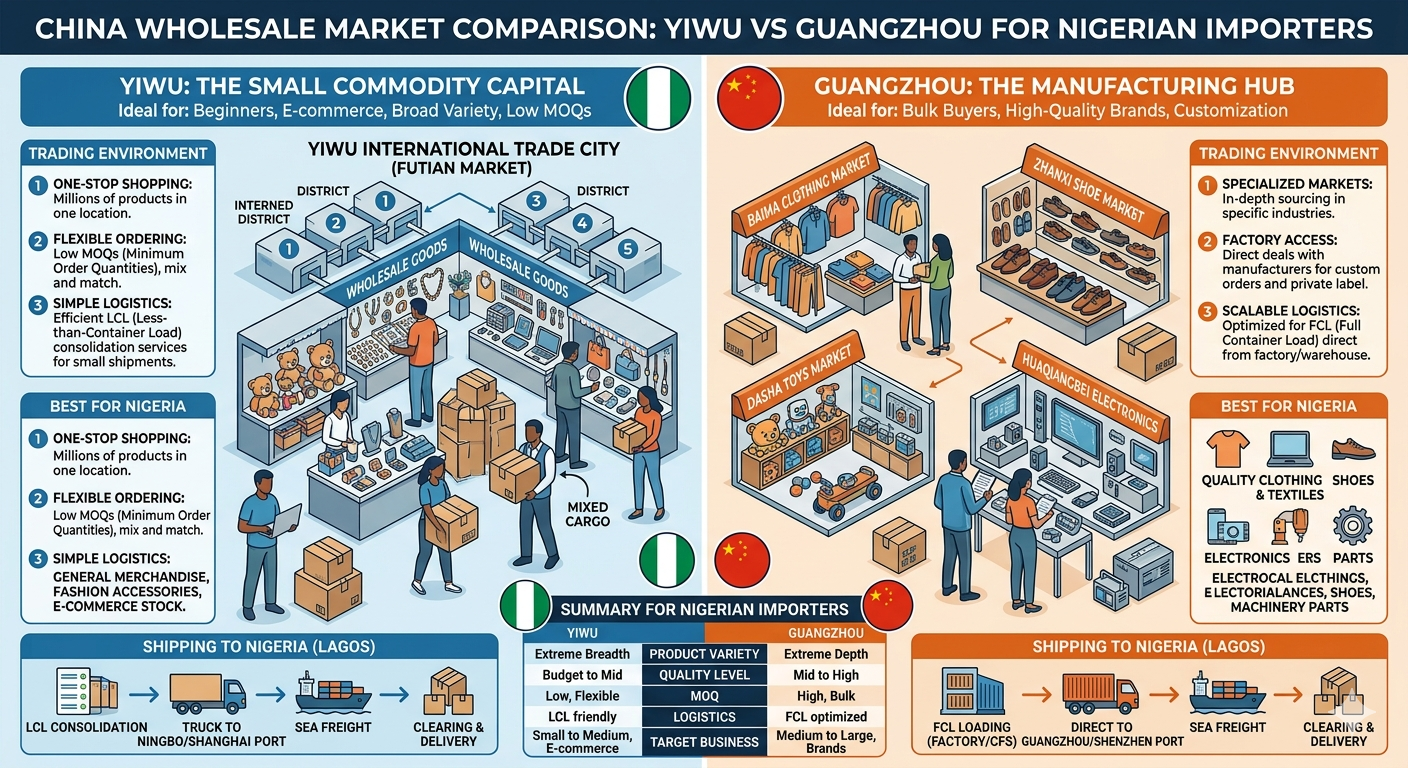
Warehousing in China for importers is an important part of the logistics chain, especially when sourcing from multiple suppliers. Many freight forwarding services and sourcing agents provide storage facilities where goods are inspected, consolidated, and prepared for export.
This process helps with China to Nigeria logistics by reducing shipping costs and improving efficiency. Instead of shipping items separately from platforms like Alibaba or 1688, Super Moonlight’s warehouses in China allow consolidation into a single shipment, improving quality control before export and minimizing errors.
Aside from cost savings, warehousing also enables proper quality control before goods leave China. Items can be inspected, sorted, and repacked before export, reducing the risk of damaged or incorrect goods arriving in Nigeria. This is especially important for bulk orders where errors can be costly to reverse after shipping.
Consolidation through a warehouse also simplifies customs clearance, as a single consolidated shipment requires less documentation and processing compared to multiple separate consignments. For Nigerian importers sourcing from multiple suppliers on platforms like 1688 or Alibaba, this means fewer delays at the port and more predictable delivery timelines.
Custom Clearance and Delivery
If you are importing goods from China to Nigeria, understanding customs clearance and delivery is not optional, it’s essential. This stage determines whether your goods arrive smoothly, get delayed, or end up costing you more than expected.
For Nigerian business owners, especially those in e-commerce, fashion, electronics, and wholesale trading, mastering this process is key to running a profitable and stress-free importation business.
What is Custom Clearance?
Customs clearance is the process of getting your goods legally approved to enter Nigeria through the Nigeria Customs Service. Before your goods can leave the port or airport, customs authorities must:
-
- Verify your shipment documents
-
- Assess and calculate import duties
-
- Inspect goods (if necessary)
-
- Confirm compliance with Nigerian import regulations
Without successful clearance, your goods remain stuck at the port.
Step-by-Step Customs Clearance Process in Nigeria
Shipment Arrival
Goods arrive at Nigerian ports (Apapa, Tin Can Island) or airports.
Documentation Submission
Required documents are submitted for verification.
Duty Assessment
Customs calculates import duties based on product type and value.
Payment Charges
All duties, taxes, and fees must be paid
Inspection
Some shipments are physically inspected or scanned.
Release
Goods are approved and released for delivery.
What Documents are required for Custom Clearance?
This is the section that will save your shipment from being held at the port. Most Nigerian importers discover these documents exist only when their goods are already sitting in a container at Apapa or Tincan, at which point everyday costs money in demurrage charges.
Errors in documentation are one of the most common causes of delays and penalties. To avoid delays, ensure you have:
FORM – M
Mandatory for all imports into Nigeria above a certain threshold. Processed through your authorized dealer bank and submitted to the Central Bank of Nigeria. Must be initiated before goods are shipped.
SONCAP Certificate
Required for most regulated products, including electronics, electrical equipment, toys, and building materials. Must be obtained before goods are shipped, you cannot sort it out at the port after arrival.
PAAR – (Pre Arrival Assessment Report)
Generated by Nigerian Customs Service based on your shipment documents. Determines your customs duty and must be ready before cargo arrives.
Commercial Invoice
Detailed invoice from your supplier showing product description, quantity, unit price, and total value. Must match every other document in your file.
Bill of Lading (sea freight) or Airway Bill (air freight)
The contract of carriage between the shipping line and the shipper.
Packing List
Detailed breakdown of every item in your shipment per carton
NAFDAC Approval
Required specifically for food products, cosmetics, drugs, water, and medical devices
Common Challenges Nigerian Importers face
Common challenges Nigerian importers face after goods shipment is delays at ports due to congestion, hidden or unexpected charges, incorrect product classification (HS Code issues), poor communication with clearing agents, risk of demurrage (extra storage fees) and difficulty coordinating delivery after clearance.
These challenges can significantly affect your profit and business timeline if not handled critically. When it comes to handling customs clearance and delivery, Nigerian importers generally have three main options.
Self-Clearing is the first option, business owners can decide to handle the clearing process by themselves. You have full control of the whole process. The cons in this method is that it is highly technical and stressful, time-consuming and prone to costly mistakes.
Another one is hiring a freelance clearing agent , the only responsibility of the clearing agent is to clear your goods professionally. This comes with less stress and shows some level of expertise. Hiring a clearing agent might not be the best method for you if the agent lacks accountability and reliability and more importantly. Customs clearance and delivery are the backbone of any successful import business in Nigeria. While there are multiple ways to handle the process, the smartest and most efficient approach is working with a trusted logistics partner. A logistics company manages everything from shipping coordination to customs clearance and delivery.
Why Full-Service Logistics Is the Smart Choice
For most modern businesses, especially those importing regularly, using a full-service logistics provider is the most efficient option.
Full service logistics covers freight forwarding, documentation handling, customs clearance, delivery and distribution. This approach reduces errors, saves time, and allows you to focus on growing your business instead of chasing shipments.
A reliable logistics partner gives you a full landed cost breakdown before your money moves. The product cost, freight charges, customs duty, VAT (currently 7.5% on CIF value in Nigeria), and clearing fees. There should be no surprise invoices after your goods arrive.
Among the available options, Super moonlight Logistics stands out as a reliable partner for Nigerian importers dealing with China-to-Nigeria shipping. Super Moonlight Logistics handles the full documentation process as part of their Customs Clearance service from Form M coordination to SONCAP processing to PAAR filing and works closely with port authorities to ensure fast and compliant clearance, minimizing delays and avoiding penalties.
In handling duties at Super Moonlight, we ensure your goods are classified properly, and all import duties are calculated with transparency, helping you avoid overpayment. From supplier coordination in China to arrival in Nigeria, we manage the entire shipping process, whether via air freight or sea freight.
Supermoonlight is known for offering reliable delivery services over the years. After clearance, your goods are transported safely to your warehouse, shop, or preferred destination anywhere in Nigeria. Your convenience is our priority, you don’t have to deal with multiple agents. Your forms are prepared, submitted, and processed by our Customs Clearance team and your goods clear without surprises.
Supermoonlight offers a complete door-to-door logistics solution, saving you time and stress. We track and receive Your Shipment using our shipment tracking portal to follow your cargo 24/7. Once cleared, your imported products are delivered to your Nigeria warehouse, shop, or office address ready for sale.
Instead of navigating complex regulations, unpredictable charges, and delivery challenges on your own, a company like Supermoonlight Logistics ensures your goods move smoothly from China to your doorstep. With our experience over the years, you can avoid shipment delays, documentation errors, hidden charges and poor handling of your goods. With this, you have peace of mind and your business grow faster.
Ready to Import from China Without Stress?
Stop worrying about supplier issues, shipping delays, or customs problems.
 Let Supermoonlight Logistics handle everything for you! From product sourcing to doorstep delivery in Nigeria.
