

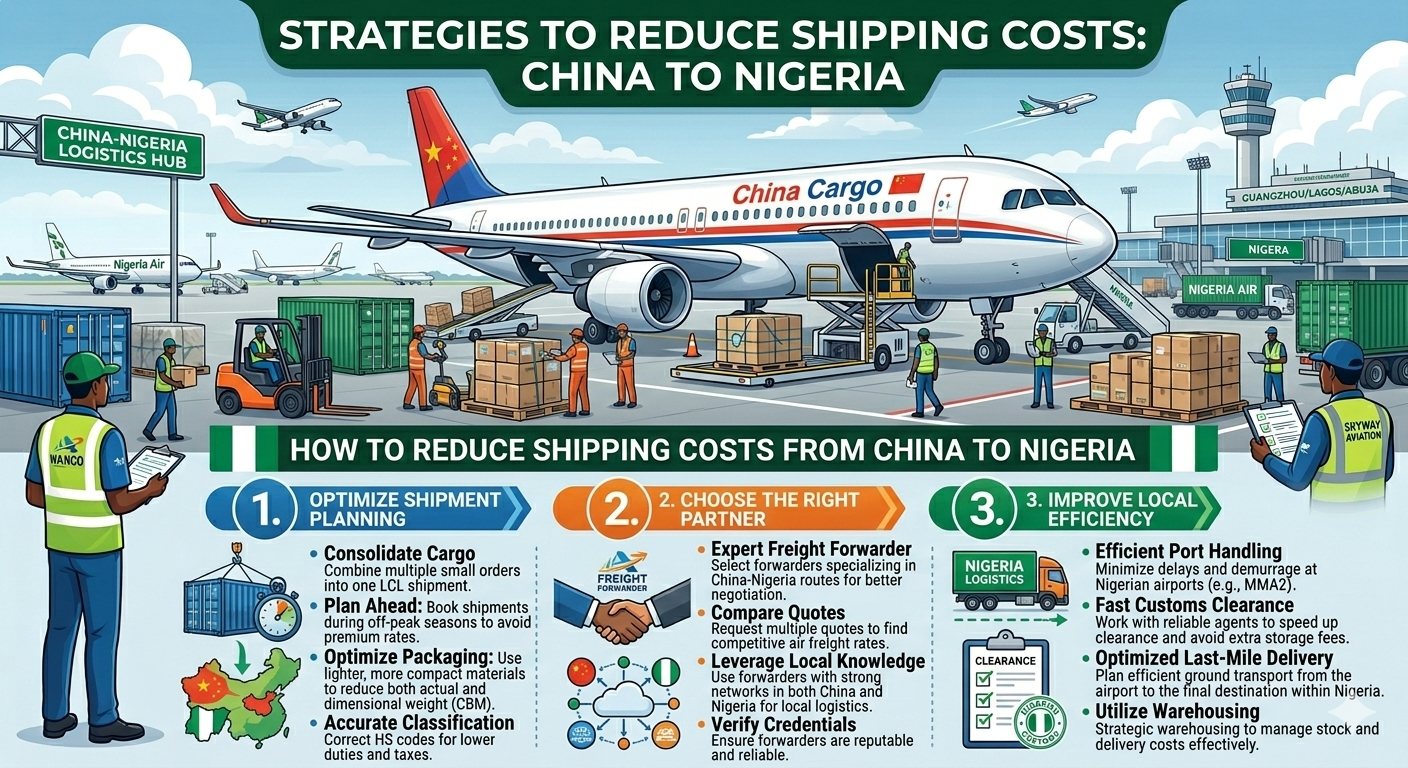
Importing goods from China to Nigeria is profitable but only if your shipping costs are properly managed. Many Nigerian importers lose money not because their products don’t sell, but because their logistics expenses are too high. Hidden freight charges, poor packaging, incorrect customs documentation, and wrong shipping methods can significantly reduce profit margins. The good news? Shipping costs can be controlled.
Here’s a complete guide on how to reduce shipping costs from China to Nigeria without compromising speed or reliability.
1. Choose the Right Shipping Method
One of the biggest mistakes importers make is choosing the wrong freight option.
Air Freight
- Fast (5–10 days)
- Higher cost per kilogram
- Best for small, urgent, or high-value goods
Ocean Freight
- Slower (30–45 days)
- Much cheaper for bulk cargo
- Ideal for heavy or large shipments
If your goods are not urgent, ocean freight from China to Nigeria is significantly more cost-effective. Planning your inventory early allows you to avoid expensive emergency air shipments.
2. Consolidate Multiple Suppliers into One Shipment
If you buy from different suppliers in China, shipping each order separately increases costs.
Instead:
- Use a warehouse in China
- Consolidate goods from multiple suppliers
- Ship everything together
Cargo consolidation reduces per-unit shipping cost and avoids multiple documentation charges.
3. Compress and Repack Bulky Cargo
Shipping costs are calculated using either actual weight or volumetric weight — whichever is higher.
Bulky but lightweight goods (like clothing, foam, or textiles) can become expensive due to volume.
Professional logistics companies offer:
- Cargo compression
- Carton repacking
- Space optimization
4. Understand Volumetric Weight Calculation
Air freight especially uses volumetric weight pricing.
The formula typically used:
Length × Width × Height ÷ Dimensional Factor
If your cargo is poorly packed, you pay for empty space.
Optimized packaging ensures you are not overpaying for unused volume.
5. Plan Shipments in Advance
Urgent shipping is expensive.
When you plan inventory early:
- You can use ocean freight instead of air freight
- You avoid peak season rate increases
- You reduce last-minute documentation errors
Peak seasons (such as festive periods) often increase freight rates. Planning ahead locks in better pricing.
6. Work with an Experienced Freight Forwarder
Choosing the cheapest agent is not the same as choosing the most cost-effective option.
An experienced freight forwarding company helps you:
- Select the best shipping method
- Classify goods correctly using proper HS codes
- Avoid unnecessary customs penalties
- Reduce demurrage charges
- Provide transparent pricing
Improper customs clearance in Nigeria can lead to delays and additional port charges that exceed the original shipping cost.
7. Avoid Demurrage and Storage Charges
When cargo stays too long at the port or airport, storage fees accumulate daily.
To avoid this:
- Ensure documents are complete before cargo arrival
- Confirm duty estimates early
- Use a logistics partner with strong customs expertise
8. Ship in Bulk When Possible
Small, frequent shipments cost more over time.
Bulk shipping:
- Reduces per-unit freight cost
- Improves negotiation power
- Optimizes container space
9. Negotiate with Suppliers for Better Packaging
Sometimes suppliers use oversized cartons that increase shipping volume.
Ask suppliers to:
- Use compact packaging
- Remove unnecessary padding
- Provide accurate weight and size details
10. Consider Total Landed Cost Not Just Freight Price
The cheapest freight quote is not always the most affordable overall.
Consider:
- Shipping charges
- Customs duties
- Clearance fees
- Handling costs
- Delivery to your warehouse
Common Costly Mistakes to Avoid
- Choosing air freight for non-urgent cargo
- Under-declaring goods (leading to penalties)
- Poor documentation
- Not consolidating shipments
- Ignoring cargo compression opportunities
Reducing shipping costs from China to Nigeria is not about cutting corners, it’s about smart logistics planning.
By:
- Choosing the right freight method
- Consolidating cargo
- Compressing bulky goods
- Planning ahead
- Working with experienced freight professionals
You can protect your margins and scale your import business confidently. Efficient logistics is not just about moving goods it’s about maximizing profit. Contact Super Moonlight Logistics for more.
